Oct 6, 2025
The Performance Case for Better Water

The Performance Case for Better Water
The body begins to register the effects of dehydration before thirst becomes noticeable. By the time most people reach for a glass of water, measurable changes in attention, reaction time, and cognitive output are already underway. The research on what hydration status actually does to daily performance is specific, well-documented, and largely ignored by people who have otherwise thought carefully about every other input in their routine.
Where the Threshold Is
Cognitive performance decrements become detectable at approximately 1 to 2% body mass loss from fluid deficit.¹ At 2% — roughly one liter for most adults — studies report significant declines in attention, short-term memory, and working memory.² Reaction times slow by approximately 12 to 18% in mildly to moderately dehydrated young adults performing daily-life cognitive tasks.³ A 2024 study using objective hydration markers found that dehydrated adults performed approximately 0.65 standard deviations worse on sustained attention tasks compared with adequately hydrated controls — a difference large enough to be practically meaningful in any cognitively demanding context.⁴
These effects do not require heat stress or athletic exertion to appear. They occur in ordinary daily conditions.
What It Does to Physical Output
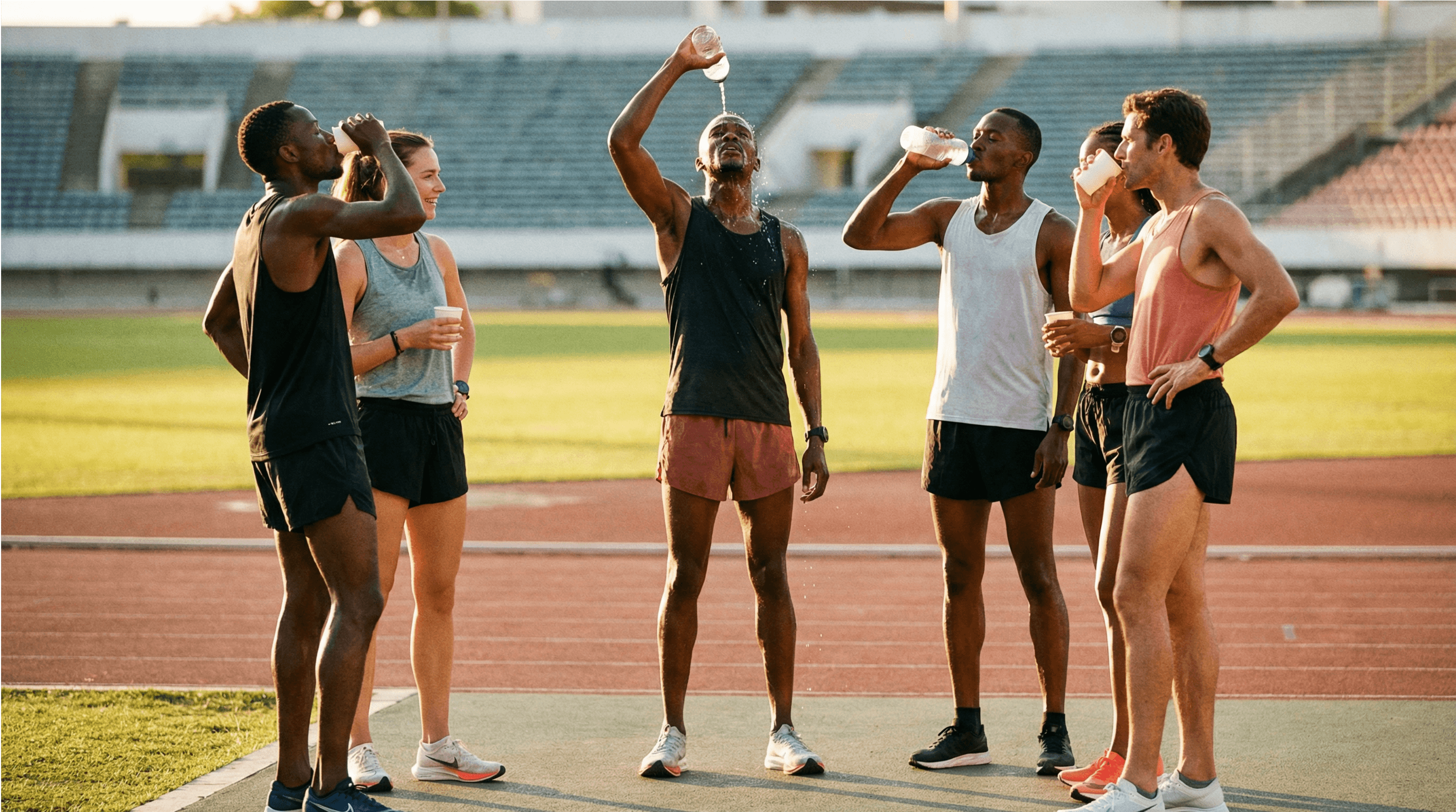
The physical performance data follows the same pattern. Endurance capacity is consistently impaired when dehydration exceeds 2% of body mass, with reduced aerobic output, elevated heart rate, and higher perceived exertion documented across controlled exercise studies.¹ At 3 to 5% body mass loss, muscular strength and power output decline, fine motor skills deteriorate, and the risk of heat-related illness increases.¹
In occupational settings — not athletic ones — workers with moderate dehydration demonstrated reduced work output, slower task performance, and greater fatigue in physically demanding roles.¹ A workplace intervention that improved hydration through increased water intake resulted in measurable improvements in lower-limb muscle performance and reductions in blood pressure over several weeks.⁵
The Mood and Energy Dimension
The effects are not limited to cognition and physical capacity. A controlled trial found that mild dehydration increased total mood disturbance, elevated fatigue, and reduced vigor and alertness in healthy adults — while rehydration improved mood scores, reduced fatigue, and enhanced short-term memory and attention.⁶ A separate British Journal of Nutrition trial found that providing 330 milliliters of water to adults who reported thirst improved subjective alertness and visual sustained attention compared with a no-water control group.⁷
The margin between adequate and suboptimal hydration is not dramatic. It does not feel like illness. It feels like a slightly harder day.
The Role of Minerals
Hydration is not only a function of volume. Magnesium plays a direct role in energy metabolism during physical activity — research has shown that it supports glucose availability in muscle and blood, enhances lactate clearance, and improves metabolic efficiency under exercise stress.⁸ Calcium is required for every muscle contraction through its role in excitation-contraction coupling at the cellular level, and hypocalcemia is directly associated with impaired neuromuscular performance, cramping, and reduced force generation.⁹
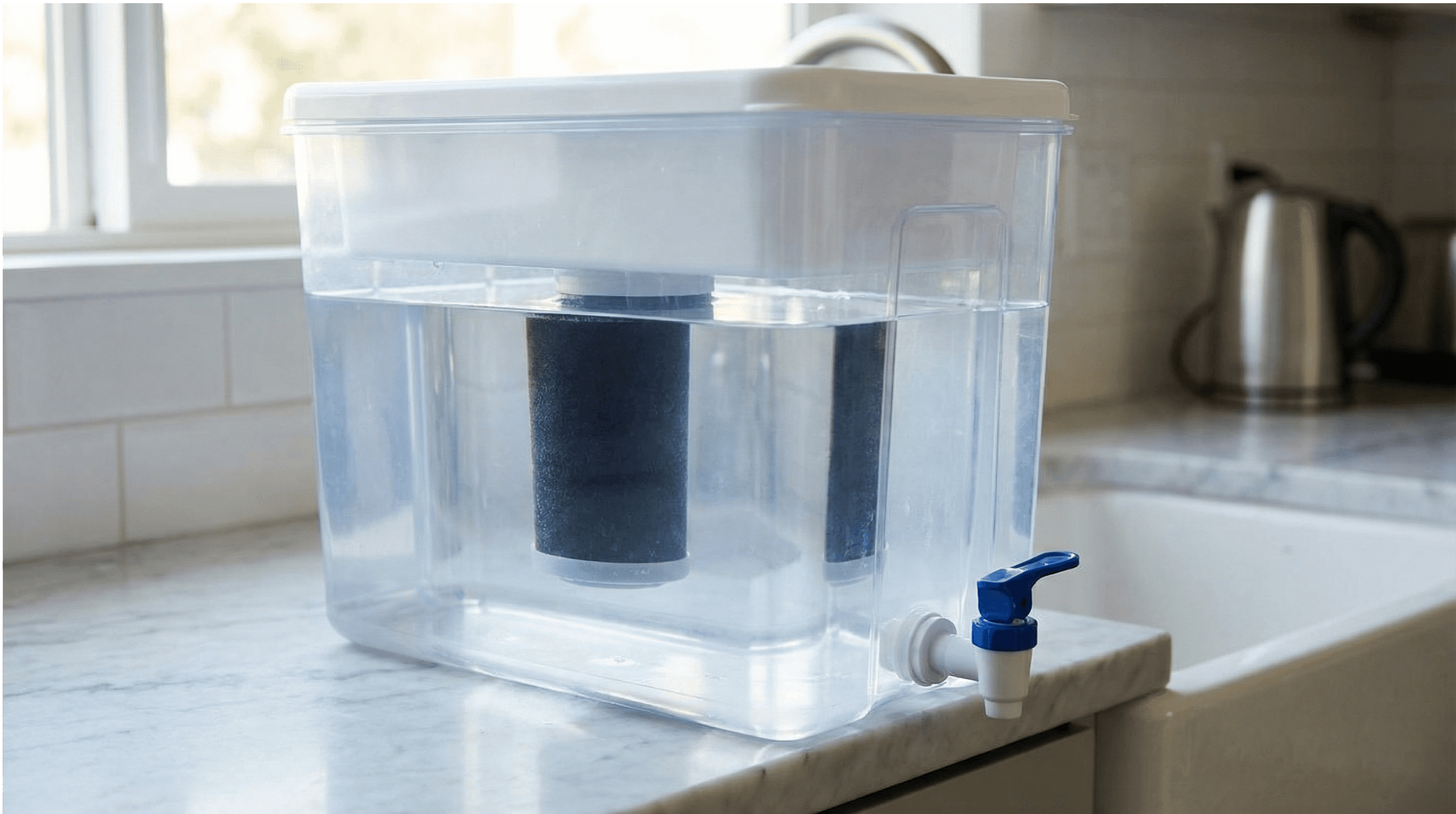
Both minerals are substantially removed by reverse osmosis filtration without remineralization. Water that has been stripped of calcium and magnesium is delivering less of what the body uses to perform — regardless of how much of it is consumed.
What Chronic Underperformance Looks Like
An estimated 16 to 21% of adults experience chronic or recurrent mild dehydration during normal daily activity.¹⁰ The consequences — poorer memory, reduced attention, elevated fatigue, slower reaction time — do not announce themselves as dehydration. They present as an ordinary day that feels harder than it should.
Water quality is a performance variable. The people most likely to have addressed sleep, nutrition, training, and recovery in detail are also the people for whom the remaining gap is most worth closing.
The research on what hydration quality does to cognitive function, physical output, and daily energy makes a specific and well-supported argument. Water is where performance starts.
Sources
PMC / National Library of Medicine — Water, Hydration and Health (Popkin et al., PMC2908954)
PMC / National Library of Medicine — Hydration and Cognitive Performance Review (PMC6603652)
Academic Medicine — Dehydration, Reaction Time, and Working Memory in Young Adults (2024)
PMC / National Library of Medicine — Serum Osmolality and Sustained Attention (PMC11144104)
PMC / National Library of Medicine — Workplace Hydration Intervention and Muscle Performance (PMC8998380)
PMC / National Library of Medicine — Pross et al., Hydration Status and Mood (PMC6603652)
Cambridge / British Journal of Nutrition — Effects of Hydration Status on Cognitive Performance and Mood
PLOS ONE — Magnesium and Exercise Performance (journals.plos.org)
PMC / National Library of Medicine — Calcium and Neuromuscular Function (PMC2908954)
Market.us — Dehydration Statistics Report (2026)