Aug 4, 2025
The False Confidence Problem
The False Confidence Problem
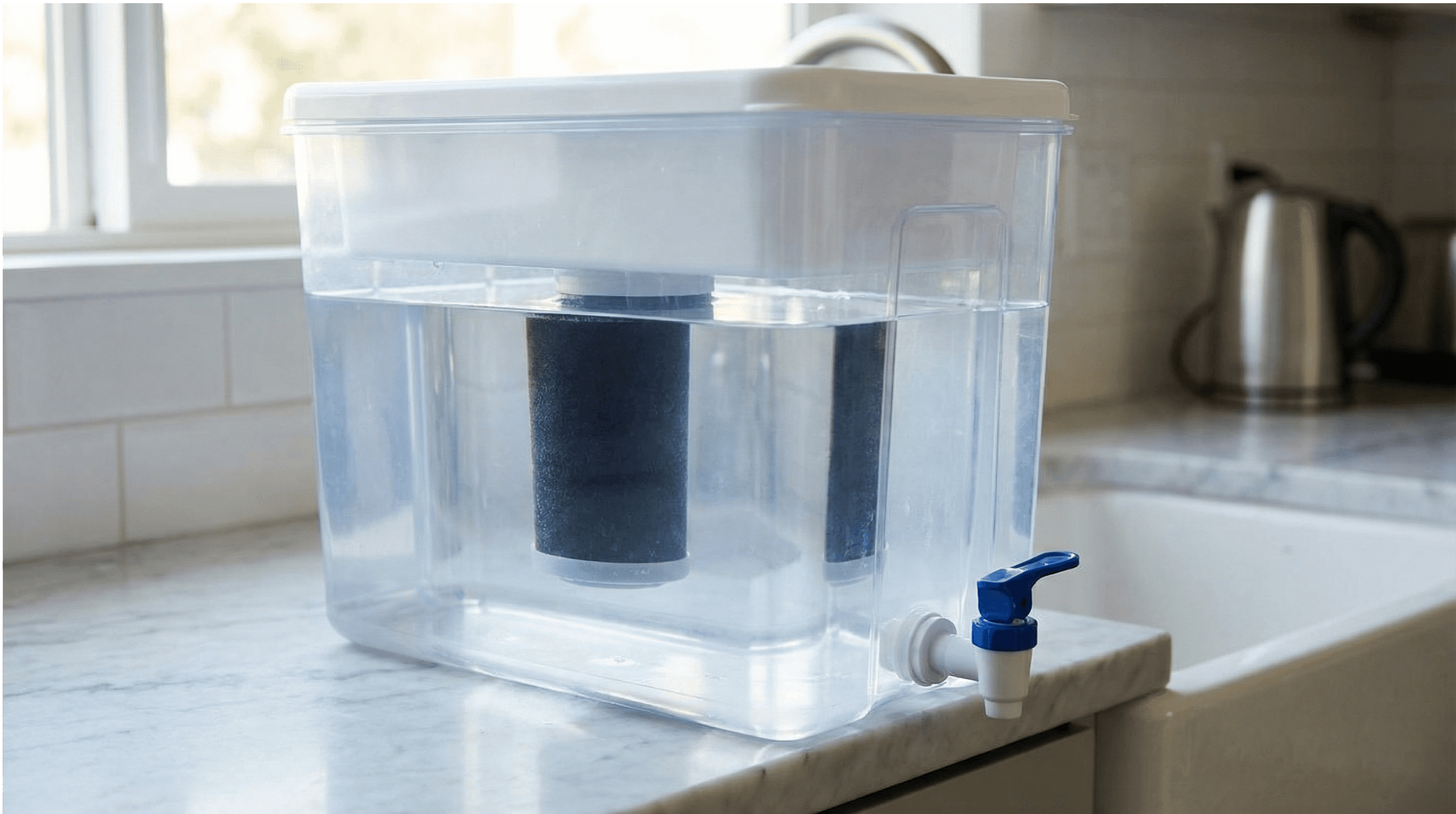
Almost half of American households have taken a step toward better water. They have a pitcher filter on the counter, a cartridge in the fridge, or a subscription to bottled delivery. That step is real, and the intention behind it is sound. What it addresses, however, is a narrower problem than most people realize.
What Filters Were Designed to Do
Activated carbon filtration — the technology inside most consumer pitcher and fridge filters — was developed to improve taste and reduce chlorine. It does both of those things. It removes organic compounds that affect odor and flavor, and in some configurations it can reduce certain heavy metals through adsorption.
That is what it was built for. The contaminants that have entered drinking water supplies in the decades since — PFAS compounds, microplastics, pharmaceutical residues — are a different category of problem, and most consumer filters were not designed with them in mind.
What the Testing Shows
A 2024 peer-reviewed study tested six common pitcher filters — including Brita, PUR, ZeroWater, and others — against 75 PFAS compounds in real tap water.¹ The results varied significantly by brand, but the findings for the most widely used filter were striking. Brita Elite removed approximately 20% of total PFAS over its tested lifetime.¹ For two of the most studied compounds, PFOS and PFOA, Brita's removal rate was 57% and 52% respectively — and that performance declined as the filter aged, dropping to roughly 8% total PFAS removal after 160 liters of use.¹
The filter most commonly found in American households was removing less than one in ten PFAS molecules by the time most people would still consider it functional.
The PFAS Problem in Context
PFAS are not a niche concern. A USGS national sampling study estimated that at least one PFAS compound is present in approximately 45% of U.S. tap water samples.² EPA estimates that between 70 and 94 million Americans are exposed to PFAS in their drinking water at levels of concern.³ In 2024, the EPA established the first enforceable federal limits for six PFAS compounds, projecting that roughly 6 to 10% of regulated public water systems will need to reduce their PFAS levels to comply.⁴
The regulation is new. The contamination is not.
Microplastics and What Carbon Misses
Microplastics present a different kind of challenge. A 94% detection rate in U.S. tap water samples has been reported in global survey research.⁵ Carbon filtration alone addresses microplastics only partially — studies report removal efficiencies of roughly 57 to 61% for activated carbon in isolation.⁶ Point-of-use devices that combine carbon with a physical membrane barrier achieve 46 to 100% removal of specific microplastic polymers, while carbon-only devices perform substantially worse.⁷
A physical barrier is required. Carbon alone is not one.
What Actually Works
EPA identifies reverse osmosis as one of the most robust technologies for PFAS removal at the tap — describing high-pressure membranes as "extremely effective," with RO specifically noted for rejecting nearly all dissolved salts and small molecules.⁸ For microplastics, membrane-based filtration with pore sizes down to 0.2 microns, combined with carbon and ion exchange, provides the highest documented removal efficiencies.⁷ For pharmaceutical residues, advanced treatment with reverse osmosis is the most consistently documented approach to broad-spectrum removal.⁹
The technology that addresses the full range of what is present in tap water is categorically different from what sits in most kitchen counters today.
The Gap Between Perception and Reality
In a 2023 national survey, 59% of U.S. households considered their drinking water safe.¹⁰ In the same survey, 45% reported having a home filtration system.¹⁰ The two facts coexist comfortably — the filter creates a sense of resolution. What the filter is actually removing, and what it is leaving behind, is a question most people have not had reason to ask.
The step most people have already taken is real. It is also the first step, not the last one.
Sources
Frontiers in Environmental Chemistry — PFAS Removal by Pitcher Filters (2024)
NGWA / USGS — PFAS in 45% of U.S. Tap Water Samples (2023)
PMC / National Library of Medicine — U.S. Drinking Water Quality Review (PMC10907308)
Stinson Law — EPA 2024 National Primary Drinking Water Regulation for PFAS
Tampa Culligan / Orb Media Global Survey — Microplastics in U.S. Tap Water
ScienceDirect — Microplastic Removal in Water Treatment (2022)
PMC / National Library of Medicine — Point-of-Use Devices and Microplastic Removal (PMC10054062)
EPA — Reducing PFAS in Drinking Water with Treatment Technologies
PubMed / National Library of Medicine — GAC and Advanced Treatment for Pharmaceuticals
ASPE / Water Quality Association — 2023 Consumer Opinion Survey